
Structure
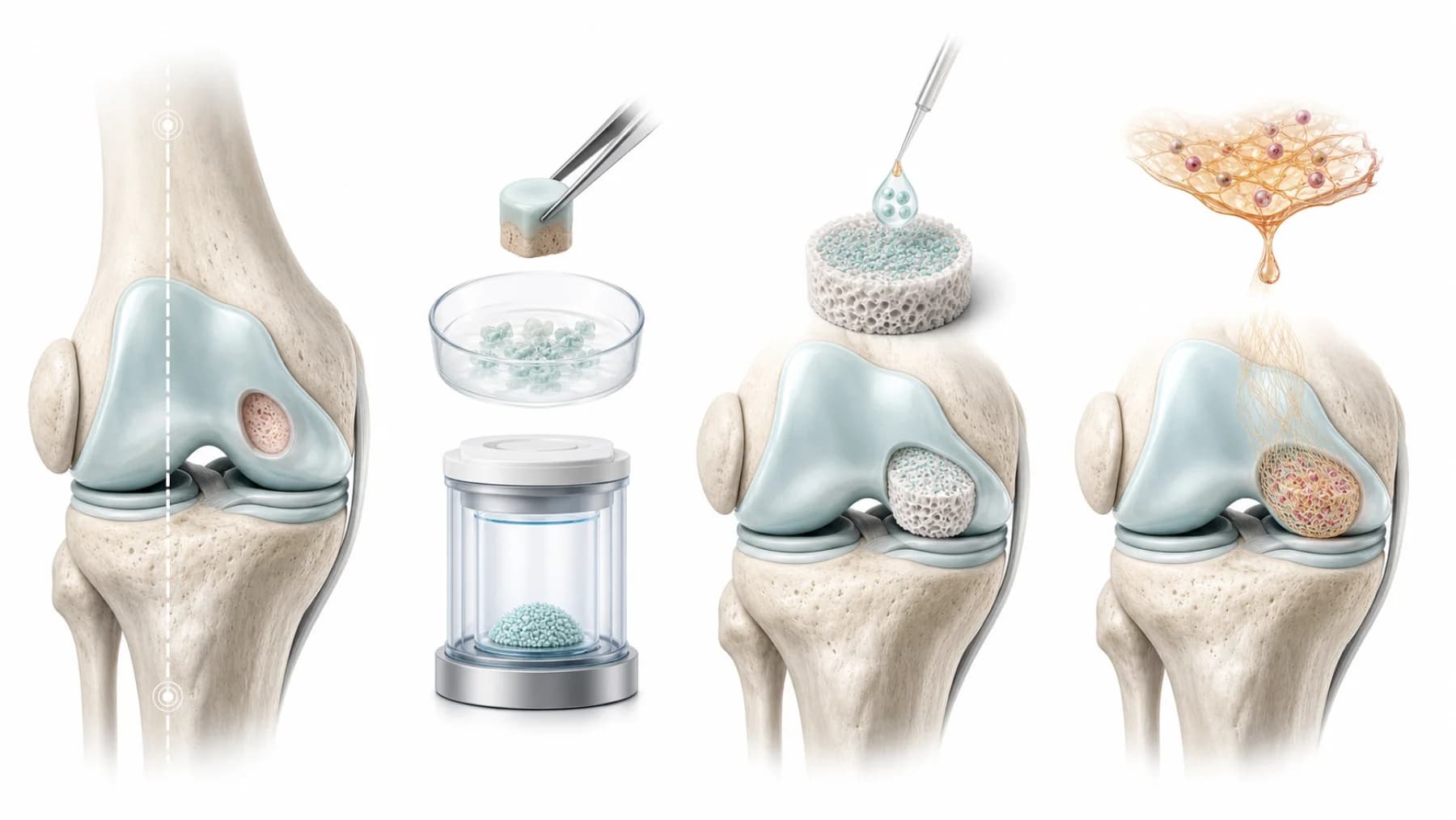
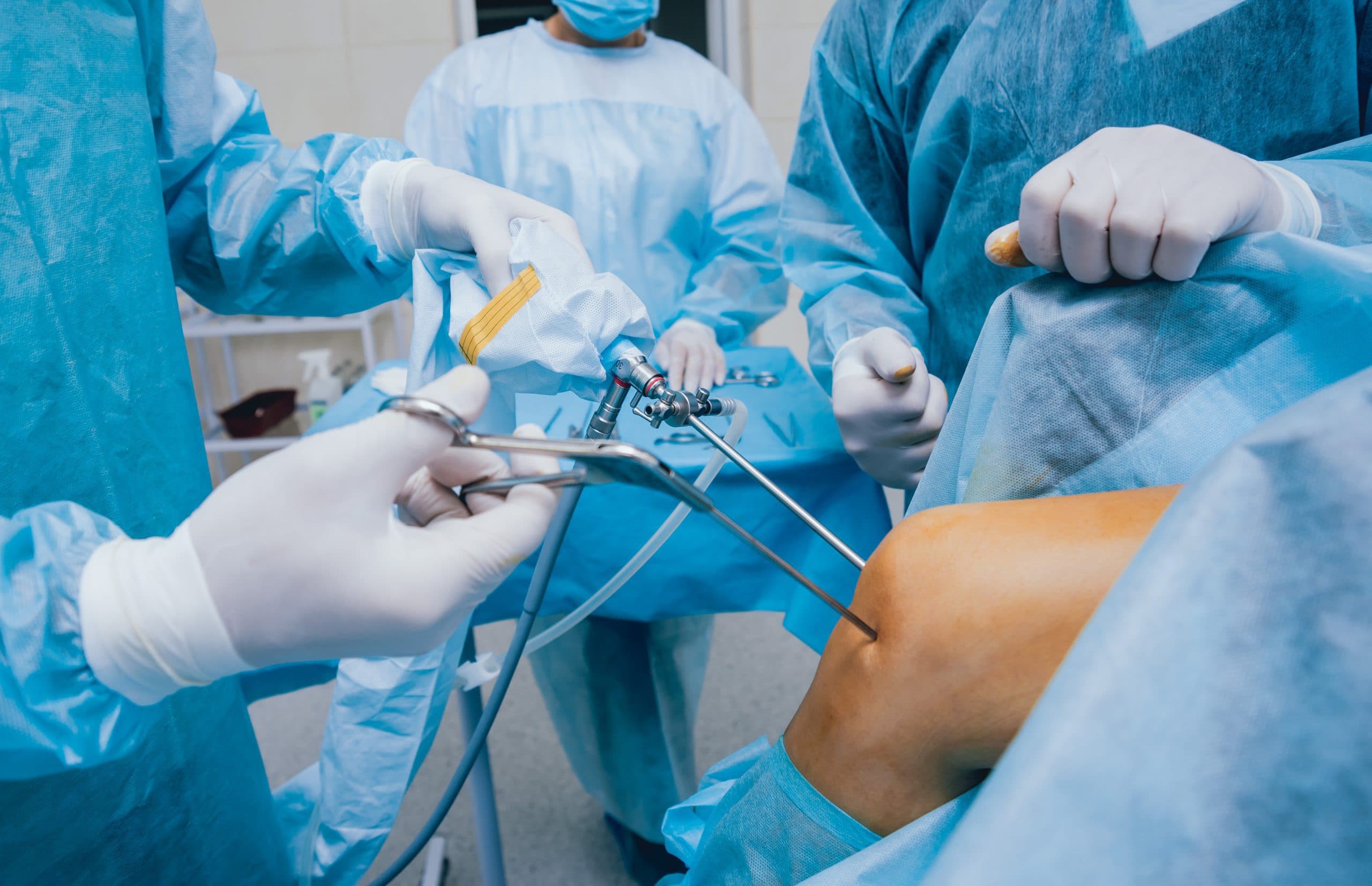
The surgical work the joint needs first: correcting relevant alignment or instability, treating associated mechanical damage and preparing a stable defect bed.
UK Exclusive · ICRS Teaching Centre of Excellence
The surgical cartilage pathway: Structure first, then Seed, Soil and Signal.
STACi is Professor Paul Lee's surgical RegenRepair™ pathway. It is considered when cartilage damage cannot be treated credibly by biology alone because the joint also needs defect preparation, stabilisation, alignment correction or other mechanical work. That Structure stage is followed by patient-derived Seed, a collagen Soil and an autologous biological Signal in one operative plan.
UK Exclusive · ICRS Teaching Centre of Excellence · 173+ verified patient reviews
Verified across three networks
STACi is the surgical extension of RegenRepair™ for cartilage and adds a fourth S: Structure. Surgery makes it possible to prepare the defect and, where needed, correct the alignment, stability or associated mechanical damage that would undermine a non-surgical cartilage treatment. Seed, Soil and Signal are then applied within that corrected environment. It costs from £28,000, all-inclusive.
NanoACi and STACi share a cartilage-regeneration logic, but they are not interchangeable delivery options. NanoACi is considered when imaging shows a joint whose structure can support a non-arthroscopic pathway. STACi is considered when the damage pattern or mechanics mean surgery is needed to create the right environment before the biological repair is placed.
The extra S does not mean every STACi patient needs an osteotomy or ligament reconstruction. It means Structure is assessed explicitly and corrected only where it would otherwise compromise the repair.
The surgical RegenRepair™ pathway
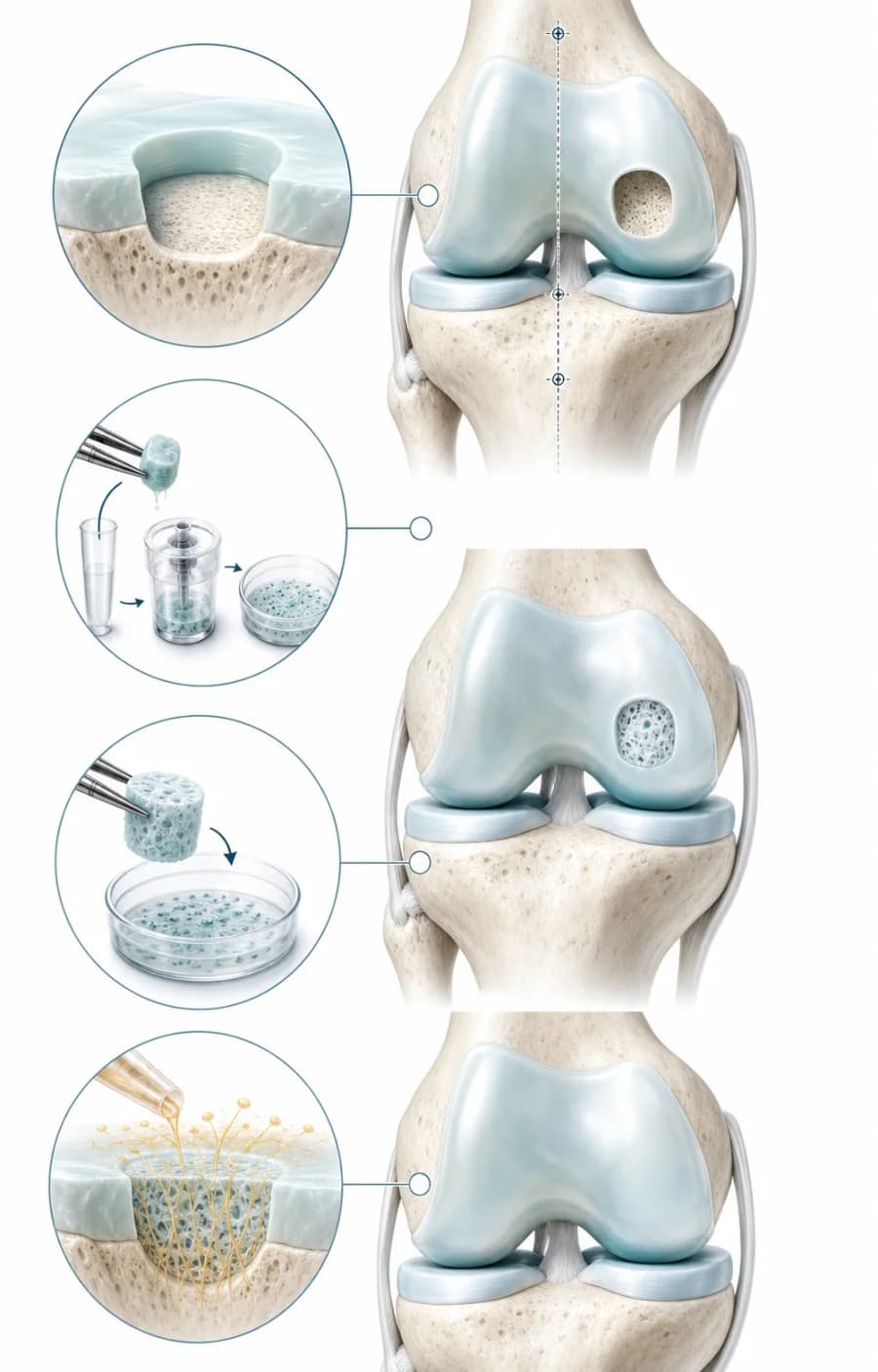
STACi is used when biology alone is not enough. The operation first creates a mechanically credible joint environment, then applies the same Seed, Soil and Signal logic used in RegenRepair™ for cartilage.
The surgical work the joint needs first: correcting relevant alignment or instability, treating associated mechanical damage and preparing a stable defect bed.
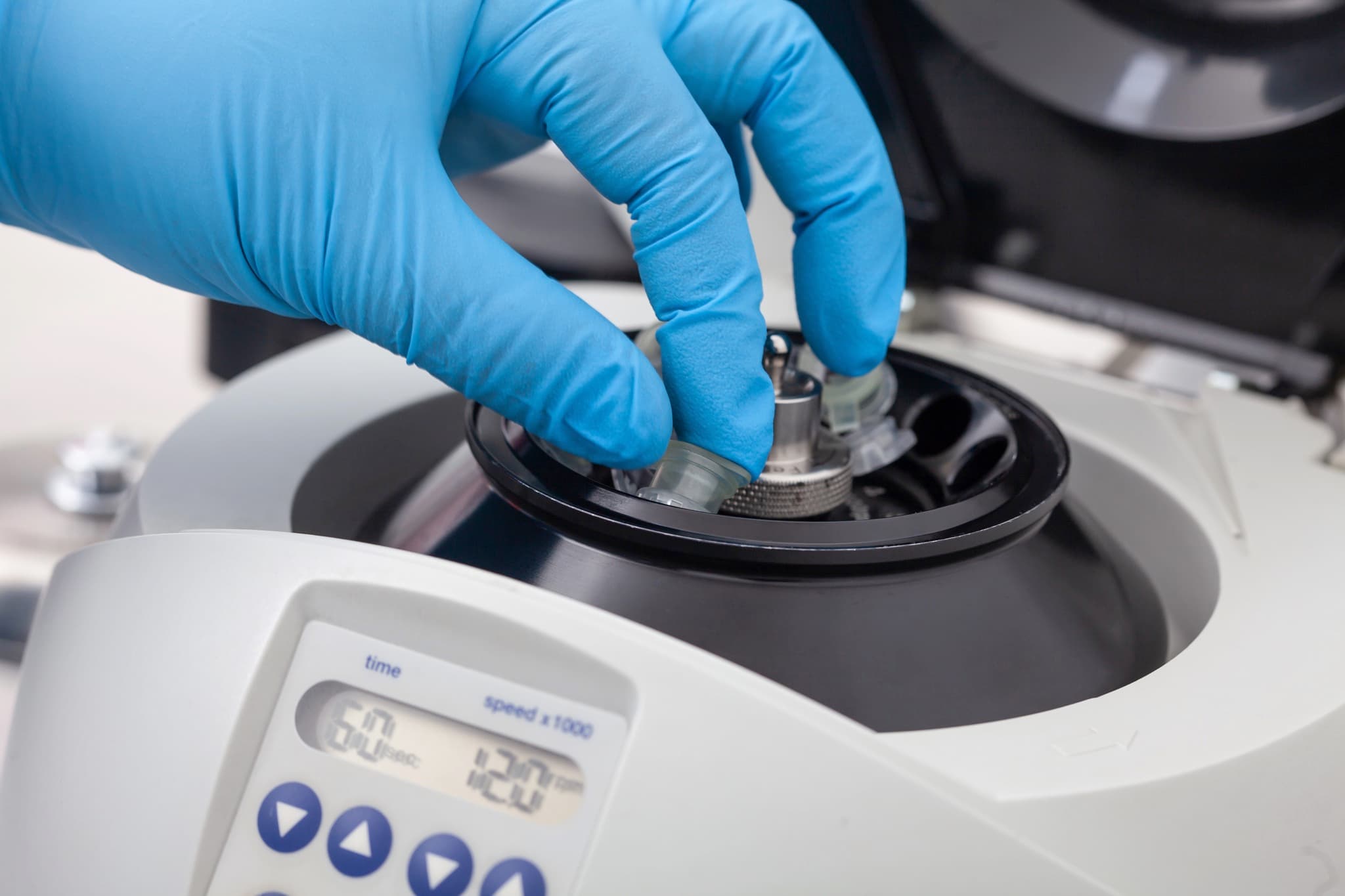
Autologous cartilage tissue is harvested and prepared during the procedure to provide the patient-derived cellular material.
A three-dimensional collagen scaffold holds the prepared tissue within the cartilage defect and supports local organisation.
A patient-derived platelet-rich fibrin preparation provides a fibrin matrix and biological signals alongside the repair.
The evidence boundary matters. Each part is supported by its own clinical or biological literature, but that does not mean the exact four-part combination has been proven as one standardised protocol for every joint and damage pattern.
Review the evidence layers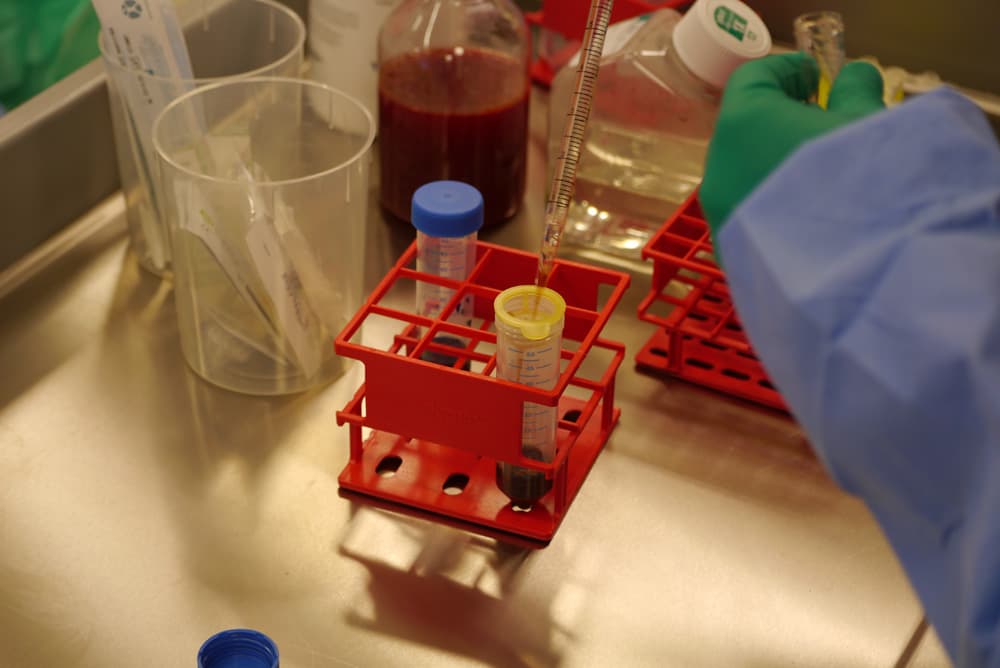
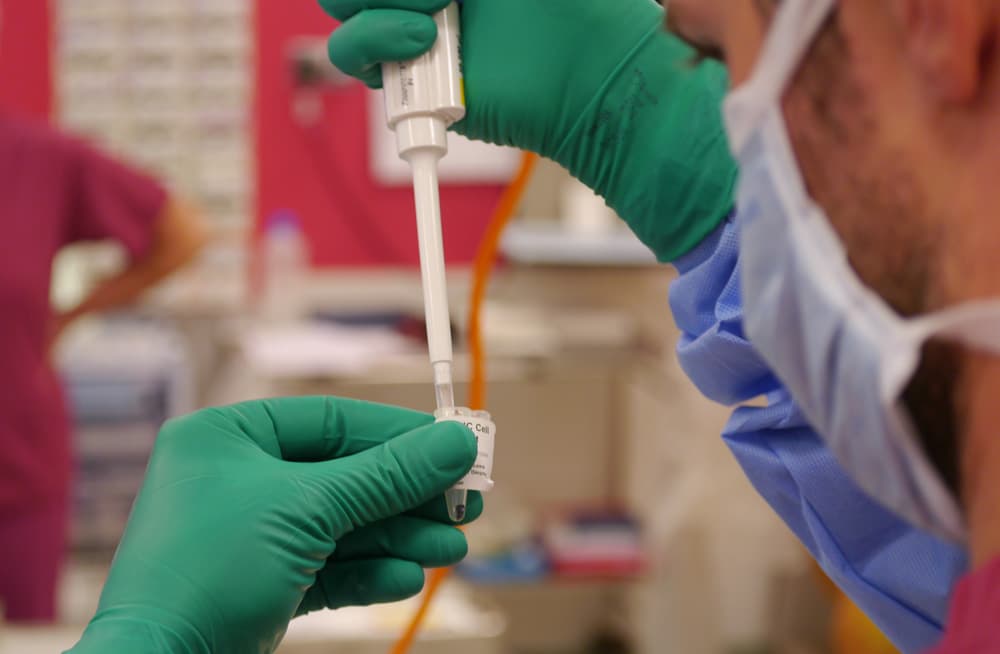
The original ACi and MACi procedures are two operations several weeks apart. In the first, a surgeon takes a small sample of your cartilage cells. Those cells are sent to a laboratory and grown for four to six weeks. Only then, at a second operation, are they put back into the joint. STACi can compress that into a single operative session: the laboratory step is brought into the theatre. Your cells are harvested and processed while the surgeon prepares the damaged area, then implanted on the scaffold in the same sitting — no second surgery, no weeks of waiting, one recovery instead of two.
ACi and MACi: two operations
Op 1: biopsy
cells taken
Op 2: implant
cells placed
STACi: one operation
One session: harvest, process, implant
the laboratory step is brought into theatre, so there is no second surgery and no wait
Whether STACi is done as a single stage or, in some cases, two, is a clinical decision made for your specific defect — not a fixed rule. Professor Lee confirms the approach after reviewing your imaging.
Being turned down for the older ACi or MACi because a defect was “too big” does not mean STACi is out of reach — it is precisely the situation STACi was designed for. The only way to know is an imaging review.
Recovery is deliberately staged to protect regenerating tissue. Loading the joint too hard too soon is the enemy of new cartilage; patience is part of the treatment.
Day-case or short stay. The scaffold and, where indicated, your own biological augmentation are placed in one session (2.5–4 hours). A brace may be fitted.
Rest to let swelling settle and the graft bed in. Gentle, passive range-of-motion often starts early. Protected weight-bearing with crutches.
Brace and crutches while the implant integrates. Two follow-up reviews with the team. A direct line to the surgical team for any concern.
Progressive return to function with your physiotherapist. Weight-bearing advances as the tissue strengthens.
Return to low-impact activity for most patients. New cartilage continues to mature within the scaffold.
Return to higher-impact sport, confirmed at the twelve-month review — depending on the size and location of the defect.
For the full week-by-week detail, see the STACi recovery timeline.
Expected Outcomes
STACi is a regeneration procedure, not a quick painkiller. The goal is a durable, living cartilage surface — not temporary symptom relief. Evidence for single-stage, scaffold-based cartilage cell therapy of this class (including the INSTRUCT-generation single-stage trials) reports meaningful, lasting improvement in pain and function, formation of hyaline-like cartilage in most patients, good defect fill and integration on MRI, and a safety profile comparable to or better than other cartilage treatments.
Your individual result depends on the size, depth and location of the damage, the surrounding cartilage, and how closely the rehabilitation is followed. We tell you, in writing at consultation, what to expect for your specific defect — and every outcome feeds our ICRS-aligned cartilage regeneration database.
| What to compare | Microfracture | OATS | ACi | MACi | STACi |
|---|---|---|---|---|---|
| What it does | Drills bone to bleed | Moves plugs of your own cartilage | Cells under a shin-tissue flap | Cells on a flat 2D sheet | Cells on a 3D scaffold |
| Tissue quality | Scar-type (fibrocartilage) | Real cartilage, limited supply | Hyaline-like | Hyaline-like | Hyaline-like, in depth |
| Defect size it suits | Small (<2 cm²) | Small–moderate | Up to ~4 cm² | Up to ~4 cm² | Larger & complex defects |
| Operations | One | One | Two | Two | One in most cases |
| Extra tissue harvested | No | Yes (donor plugs) | Yes (shin periosteum) | No | No |
| Joints | Any | Mainly knee/ankle | Mainly knee | Mainly knee | Any joint |
| UK availability | Widely | Specialist centres | Few specialist centres | Branded product withdrawn* | LCC only |
*The branded MACi product’s European authorisation was suspended in 2014; it is now a US product, licensed for the knee only. The matrix-induced ACi procedure it is named after is still performed at some UK specialist centres. See the MACi page.
The pattern across the row is consistent: STACi keeps the strengths of the earlier cell therapies — your own cells, real cartilage regeneration — and removes their limits on defect size, joint and number of operations.
Single-stage scaffold-based cartilage implantation is performed only at LCC in the UK. Patients travel from across the country and internationally for it.
Recognised by the International Cartilage Regeneration & Joint Preservation Society. Cartilage regeneration is the clinic’s principal interest, with one of the largest published outcome databases in Europe.
Consultation, surgery and every follow-up are with Professor Lee — no hand-off to a registrar.
Professor Paul Lee holds a PhD in medical engineering and has authored 80+ peer-reviewed publications cited 1,000+ times. He developed single-stage cartilage implantation within LCC’s regeneration programme.
Pricing
£28,000 all-inclusive at London Cartilage Clinic. Single-stage cartilage implantation at an ICRS Teaching Centre of Excellence. Theatre, scaffold, biological augmentation, consultant anaesthetist and 12-month follow-up included.
You may have more options than you think
At London Cartilage Clinic we follow a structured clinical framework across four areas of treatment. Before recommending a single procedure, we assess which combination of approaches gives you the best outcome.
Protect what you have. Slow degeneration and manage symptoms.
Fix specific damage. Torn tissue, unstable joints, structural problems.
Rebuild lost tissue. Biological treatments that stimulate new growth.
When other options are exhausted. Joint replacement as a last resort.
This treatment can be applied across multiple joints. Select yours to see the full range of options we offer, organised by clinical approach.
Explore All Treatment Options
STACi stands for Scaffold-based Tissue-engineered Autologous Chondrocyte implantation. It is the surgical RegenRepair™ pathway for cartilage. Surgery allows Professor Lee to address the joint's Structure—such as relevant alignment, stability, associated mechanical damage and defect preparation—before adding the Seed, Soil and Signal components of biological repair.
ACi seals cartilage cells under a flap of shin tissue; MACi improved on this with a flat collagen sheet. STACi places the cells inside a three-dimensional scaffold and, crucially, makes it possible to correct structural problems in the same surgical plan. It is considered when cartilage biology cannot credibly be delivered without also preparing, stabilising or mechanically correcting the joint.
Any joint where cartilage is damaged — knee, hip, shoulder, ankle, elbow, foot, hand or wrist. The knee is most common because focal cartilage damage happens there most often. The right approach for your joint is confirmed at consultation.
Patients with significant focal cartilage loss — often larger than 2–4 cm² — who are too young or too active for a joint replacement, and who want to preserve their own joint. It is particularly relevant when a defect is too large for OATS or microfracture.
In most cases, one. STACi brings the laboratory step into the theatre, so cells are harvested, processed and implanted in a single session — removing the weeks-long wait that ACi and MACi require. In some cases a two-stage approach is used; this is decided for your specific defect.
STACi is £28,000 at London Cartilage Clinic, all-inclusive of theatre, the scaffold, your biological augmentation, the consultant anaesthetist, the surgeon’s fee and a 12-month follow-up programme. See the STACi cost guide. The final cost is confirmed after assessment.
No. STACi is a private, UK-exclusive procedure and is not routinely available on the NHS or through UK insurers. We can provide an itemised invoice if you wish to submit a claim independently.
Recovery is staged to protect the new cartilage: protected weight-bearing with crutches for six to eight weeks, early range-of-motion with physiotherapy, return to low-impact activity from four to six months, and higher-impact sport from nine to twelve months depending on the defect. See the full recovery timeline.
It requires specialist surgical expertise, tissue-engineering facilities and a specific regulatory framework. Professor Lee and the LCC team developed the protocols and infrastructure to deliver it, making LCC the only UK centre currently performing STACi.
Still have more specific concerns?
Free Discovery CallIf you want to talk it through first, the discovery call is free and takes fifteen minutes. If you have decided you want to be assessed, book a consultation with the surgeon who will perform the procedure — and read exactly what’s included in the price first.